
How much are others responsible for the Trump presidency moving in the directions it has, asks T N Ninan.

Over the next four years corporate tax will come down by 5 per cent and lot of exemptions will get phased out.

The best message the Prime Minister could bring to London is that he will return to India to focus on economic matters. Britain, on its part, should ensure that it addresses matters that concern India, instead of engaging in pomp during his visit, says Adam Roberts.

Columnist Rajni Bakshi asks if the louder responses to the climate crisis will be those arguing that innovations are viable only when they give handsome and rapid monetary returns?
The world economy is going through a tough phase.

Ratan Tata was the first one to realise that Indian companies had become a prisoner to tradition and needed to radically innovate.

The Survey shows fiscal consolidation despite slowdown in growth.
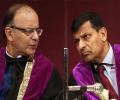
In cutting interest rates and giving a boost to the government's efforts to revive growth, RBI governor Raghuram Rajan displayed the pragmatism and flexibility familiar to those who work with him.

India's finance minister has emphasised that "it is the real economy that is going to matter.
The Budget loosened the reins on public spending to drive growth.

"A very easy solution to suggest is tax-payers must pay because the private sector has defaulted," Jaitley said, adding that bank recapitalisation, where the government puts in more capital in public sector banks to shore up their books, effectively amounted to that. "Therefore, I think let's try and make the private sector pay for their debts or allow somebody else to step in."

Noble laureate economist Amartya Sen, the chancellor of Nalanda University in Bihar's Nalanda district, has questioned the interpretation of the upcoming university as another central university rather than an international institution.
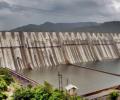
Even while the union budget may not have announced many direct schemes for Gujarat, the state has been a major beneficiary under Prime Minister Narendra Modi's first 100 days in office.

'I have never seen anybody disliked more as prime minister than Modi.' 'What is interesting is in his prime ministership, no matter whatever happens in any corner of India, Modi is blamed for it.' 'Modi has not suspended any Constitutional liberties. No Opposition leader has been put in jail... Modi is not Hitler.'

Prime Minister Narendra Modi has managed to pull off what was unimaginable a year back -- adopting a much-needed centre-left approach, says Devanik Saha.

The road ahead for the markets in the short term will depend on external factors rather than domestic developments.

A glance back at some important events that occurred in 2018.

'Happily,' says Ambassador B S Prakash, 'BRICS displayed new-found energy and built something real, a bank. Between needless nihilism and as yet unjustified euphoria, there are many stations for the BRICS train and we can watch its progress with renewed interest.'

'Our first great challenge is to create 12 million new jobs each year, to make the demographic dividend an economic dividend.' 'We are nowhere near that,' points out Mohan Guruswamy.

It is surprising that central bankers around the world have cautioned the US Federal Reserve against raising rates.

'Political meetings will be a mere side show; the main show is economic investment and the business partnership. The success of Modi's US visit will be judged on the basis of India's ability to attract American investment and setting up of manufacturing in India to give jobs to millions,' says Colonel Anil A Athale (retd).

With facts and figures, the CAG report has highlighted how Gujarat was far from a role model for states across India, and that the progress made in this province in western India in improving agriculture, education, healthcare and empowerment of women and children, was not exactly creditable, says Paranjoy Guha Thakurta.

Despite criticism of a lack of transparency and communication from the Modi-led government, BJP leaders point to "good beginnings" on several fronts to defend its performance. Sheela Bhatt/Rediff.com reports.

With the weaker-than-expected agreement at the recent Climate Change Conference at Lima, there is an urgent need to highlight endeavours in civil society and business for a sustainable global economy with grassroots empowerment, say Rajni Bakshi.

FM indicates adherence to fiscal road map, benign tax rates, correction in inverted duty structure
Those who have a long-range mission of true nation-building will pay close attention to World Bank's new action plan for fairness in all matters of land use, says Rajni Bakshi.

'Today if you look at the way India is growing many people are saying the sleeping elephant has finally woken up, is dancing!' 'I have travelled extensively, in about 60 countries. In all these the moment you say India, the first thing they mention is either an actor's name. Or they start humming a song.' 'I wanted to be in Bollywood. It is the most powerful medium we have in this country. That's soft power.' Listening in on Shobhaa De, Kabir Khan, Vikas Swarop and Saffron Art CEO Hugo Weihe speak on India's Soft Power, Hard Influence.

Here's the full text of Prime Minister Narendra Modi's address to the United States Congress.

Instead, increases in foreign-direct-investment levels; and reforms to make labour, land and capital more mobile.

'The Paris Conference is a decisive meeting on climate change.' 'Negotiating an agreement between 196 countries is indeed a challenge.' 'If we go beyond 2°C, the consequences will be extremely difficult to deal with.'The poor are the most vulnerable to the impact of climate change.'

The announcement of the formation of the BRICS bank will have as much an impact about how the non-G7 countries manage their economies and their foreign reserves, as it does on the intellectual discourse. The development priorities and agenda which was hitherto set by western experts responding mostly to western priorities and notions will now have to compete with an intellectual tradition that is and can be very different, says Mohan Guruswamy.

Prime Minister Manmohan Singh on Friday disagreed with those in the Congress who were dismissive of the challenge posed by Narendra Modi but asserted that the party would approach the 2014 Lok Sabha polls with self-confidence, irrespective of the results of the just concluded elections in five states.
